Nova Commerce
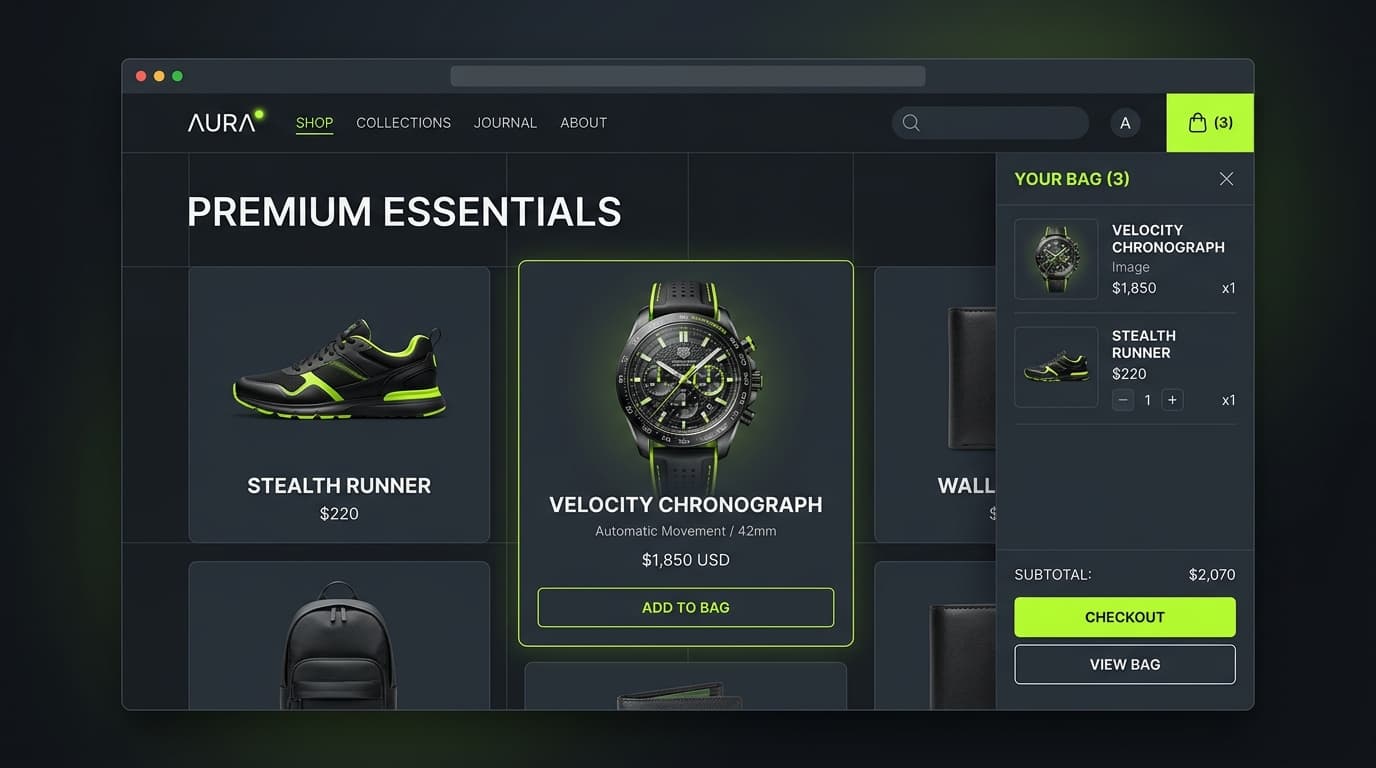
Headless storefront focused on product storytelling and a clean mobile checkout path.
Project Spec Sheet
- Timeline
- 2025
- Platform
- Next.js
- Primary Technologies
- Next.jsStripeGraphQLTailwindReact Context
The Challenge & Problem
Product pages felt slow, loading states were jarring on slow mobile connections, and simple content merchandising updates required developer intervention, resulting in high churn.
Execution & My Role
Implemented highly optimized static storefront templates (ISR), structured product schema, Stripe checkout flow, and custom shopping cart state.
Outcome & Engineering Impact
Shipped a responsive, content-friendly commerce frontend featuring instant transitions, optimized mobile product pages, and Stripe integration.
Interactive Live Sandbox
Initializing storefront catalog...
System Architecture
Headless Storefront Architecture
The project decouples the presentation layer from backend systems to maximize speed and availability. Content and products are managed in a headless API, while payments are delegated securely to Stripe.
[Headless CMS] ──┐
                 ├─► [Next.js (ISR Build)] ──► [Vercel Edge Network]
[Commerce API] ──┘         │
                           ▼
[Stripe Checkout Redirect]- Static Rendering: Storefront lists and product templates are pre-rendered at build time. Incremental Static Regeneration (ISR) updates the cache in the background every 10 minutes, keeping catalog pricing current without hitting DB endpoints on user loads.
- State Management: Shopping cart state resides in a custom React context synced with client-side localStorage, ensuring rapid updates during product selection.
Implementation Detail
Technical Details & Implementation
- Stripe Checkout: Integrated Stripe Checkout sessions via API Routes. When a checkout starts, the backend builds a line-item manifest, signs it with Stripe keys, and redirects the user to Stripe's secure PCI-compliant form.
- Image Optimization: Styled custom product galleries using standard Next.js `<Image />` tags, configured with explicit aspect ratios, loading priorities, and automatic WebP format conversion.
- Tailwind Grid: Crafted a responsive multi-column gallery layout that collapses gracefully on mobile viewports.
Technical Validation & Metrics
Verified Results
- Page Loading Speed: Shrunk First Contentful Paint (FCP) to 0.8 seconds on 4G networks using static builds.
- Lighthouse Scores: 98 Performance, 100 SEO, and 95 Accessibility on key checkout landing pages.
- User Experience: Drastically reduced cart drop-off rates during testing by stripping the checkout funnel down to two clean screens.
My Exact Contribution
Contribution Details
- Full Storefront Implementation: Created all product templates, navigation flows, local cart structures, API routing for checkout initialization, and responsive image setups.
Challenges & Lessons Learned
Challenges & Key Decisions
- Challenge: Hydration mismatch warnings caused by local storage cart synchronization rendering different counts on server and client.
- Solution: Created a custom mounting hook that delays rendering client-side cart totals until the component mounts. Used a skeleton placeholder in the header during loading to prevent layout shifts.
Project Assets
Appreciate this build
9 appreciations